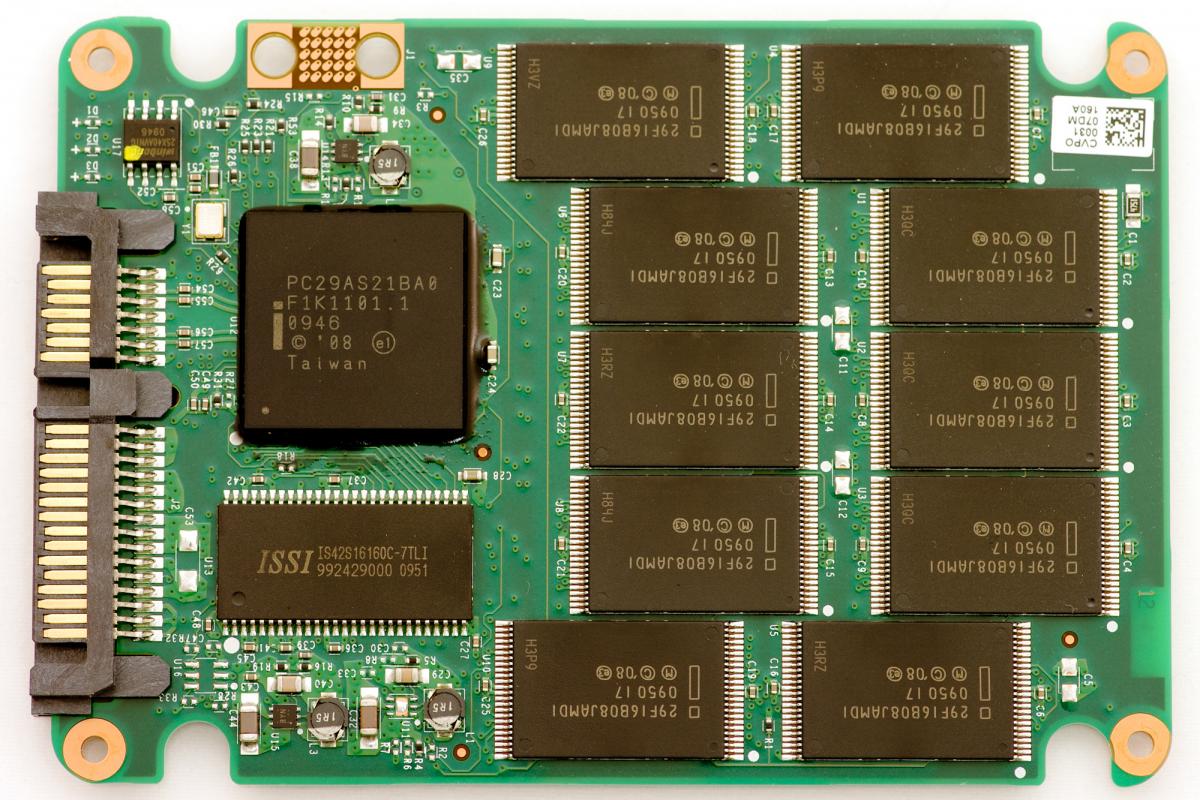
Had a similar experience with a friend's "10 TB" SSD. After I tested it with f3 and confirmed it was fake, I opened the case and found a 64 GB microSD card and an adapter/faker board.
Well, at first it only showed up as 2 TB, which was at least possible though unlikely. But f3 indicated it was faking 10, at which point I realized it was presenting several additional partitions that were so corrupted the OS wasn’t even making them available to mount. After that I opened it just to see what was inside.
SSDs can be pretty lightweight. And also sometimes the fake ones have a piece of metal or even a rock glued to the inside of the thing to make it feel heavier.
Weight doesn't even have to be accounted for. There's simply no technological or marketing reason to manufacture a 10TB SSD. An odd size like that is already a massive red flag.
You linked a 15.3TB drive which doesn't dispute his point. 10TB has never been a manufactured SSD size that I'm aware of. In the enterprise we've got approximately 960GB, 1.92TB, 3.84TB, 7.6TB, 15.3TB, 32TB.
10 is skipped entirely, unless you can provide an example of any reputable manufacturer producing one.
Consumer drives don't follow that exactly, but consumer SSDs also don't hit 10TB+.
Exactly. I didn't say 10TB was too big, I said it was an odd size. There's no easy way to get close to 10TB when using components that are sized by powers of two, plus or minus varying amounts of overprovisioning depending on market segment, and GB vs GiB differences. ~8TB SSDs are common in consumer and enterprise markets. 16TB drives that expose 15.36TB usable space are common in enterprise, and 12.8TB usable space from ~16TB raw flash isn't unheard of. 10TB usable space isn't theoretically impossible, but it simply wouldn't make sense.
> There's no easy way to get close to 10TB when using components that are sized by powers of two...
I expect you can get any usable capacity you like by reserving some subset of the flash for onboard spare/scratch space. I think I remember long ago Anandtech doing some benchmarking the changing performance of some drives as they adjusted the size of this "housekeeping" section of the drive. No clue if it's adjustable on every drive, but it sure was on the ones they were testing.
Most drives don't have any special functionality for adjusting overprovisioning. You just don't touch a large chunk of the LBA space and you get more or less the same effect. Leaving part of the drive unpartitioned, or creating a partition but not putting a filesystem in it will accomplish that purpose.
Drive vendors can tweak this in firmware to make the drive appear to have lower accessible capacity (or higher, for fraudulent drives). But as I've said several times, doing so to make a 10TB product would not make sense. The drives that expose a 12.8TB usable capacity from 16TB of flash already have far more overprovisioning than almost anybody needs. Further reducing that to 10TB would be throwing away capacity for little or no performance gain and a useless improvement to write endurance. It's not a product any rational, non-fraudulent vendor would create, because there's no demand for such a strange configuration. The fact that it's theoretically possible to create such a product does not actually make a 10TB SSD less suspicious.
(Side note: you don't have to tell me about what Anandtech tested with SSDs. Been there, done that.)
SSDs aren't sized in powers of 2 anymore. Even the flash itself isn't due to things like spare area (and TLC flash is internally actually a multiple of 3 times a power of 2 size.)
No, I'm saying that flash devices are pretty close to powers of two because that's how the chips come. I would presume any solid state device purporting to be 10TB would be fake unless I had clear evidence otherwise.